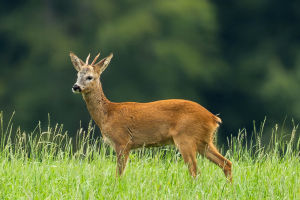
You hear it before you see anything. A deep, echoing call rolls across open land, stopping you mid-step. Moments later, a large red deer steps into view, head high, posture confident.
This is a male red deer, often called a stag, and its behavior is shaped by more than size or antlers. Understanding how it moves, feeds, and reacts helps explain why it dominates attention in the landscape.
Physical build and presence
Larger frame
Broad chest
Heavy antlers
Male red deer are built for display and endurance. Their bodies are taller and more muscular than females, with a thick neck that becomes especially noticeable during breeding season. The antlers aren't just decoration. They signal strength and status long before any close interaction happens.
An actionable observation tip is to watch posture. A male red deer often stands sideways to appear larger, especially when another stag is nearby. That body angle alone can settle disputes without physical contact.
Antlers as tools and signals
Seasonal growth
Status display
Visual communication
Antlers grow and are shed each year, following a predictable cycle. Their size and symmetry send clear messages to other stags. Larger, well-formed antlers often discourage challenges before they begin.
If you want to understand hierarchy, compare antlers during encounters. Step by step, you'll notice:
Stags assess each other from a distance.
They walk parallel, showing antlers clearly.
One often backs away without further action.
This process saves energy and reduces unnecessary risk.
Vocal behavior and communication
Deep calls
Long-distance signaling
Confidence cues
The well-known roar of a male red deer isn't random noise. It carries information about size, condition, and location. Lower, longer calls usually belong to stronger individuals and can travel far in open areas.
An actionable listening tip is to note timing. These calls are most frequent at dawn and dusk. If you hear repeated calls from the same spot, it often marks a core area the stag is defending through sound alone.
Daily movement and territory use
Defined routes
Core resting zones
Feeding loops
Male red deer follow familiar paths between feeding and resting areas. These routes reduce energy use and keep them aware of surroundings.
You can map this behavior by watching tracks or repeated sightings. Seeing the same stag cross a trail at similar times each day usually means you're near a regular movement corridor.
Feeding habits and energy needs
High plant intake
Selective grazing
Seasonal adjustment
Male red deer need large amounts of plant material to maintain their size. They graze on grasses, leaves, and shoots, adjusting choices based on availability.
A practical way to notice feeding preference is to look at plant height. Stags often target mid-height growth that offers the best balance of nutrition and ease of access. During colder periods, feeding becomes more focused and efficient.
Social behavior outside breeding season
Loose groups
Calm interactions
Shared space
Outside the breeding season, male red deer may form small groups. These associations are usually relaxed, with little tension. Antlers are still present for part of this time, but they play a smaller role.
An actionable observation is to watch spacing. Individuals maintain comfortable distances, adjusting position rather than forcing contact. This calm grouping helps conserve energy.
Seasonal behavior shifts
Increased alertness
Territory focus
Reduced roaming
As breeding season approaches, behavior changes noticeably. Males become more vocal, more attentive, and less willing to leave key areas.
You'll see this by comparing movement patterns. A stag that once wandered widely may suddenly stay within a smaller zone, investing energy in presence rather than travel.
Awareness and survival strategies
Constant scanning
Wind awareness
Quick withdrawal
Despite their size, male red deer rely on awareness rather than confrontation. They pause often, lift their heads to scan, and use wind direction to detect changes in their environment.
If you're observing quietly, notice how often a stag stops feeding to look around. That pause is a survival habit, not nervousness.
Spending time watching a male red deer reveals a balance between strength and restraint. Every call, step, and pause has a purpose. It's not just about antlers or size—it's about timing, awareness, and knowing when presence alone is enough.