If you've ever watched your pet cat snooze for hours, you might think sleep is simple. But in the animal kingdom, sleep takes on remarkable and sometimes puzzling forms.
From dolphins keeping half their brain awake to birds dozing mid-flight, animals have evolved ways to rest that fit their survival needs.
These adaptations remind us that sleep isn't one-size-fits-all—it's a tool shaped by environment, biology, and danger.
Sleeping with Half a Brain
Dolphins and other marine mammals face a challenge we don't: they need to breathe consciously. To survive, they developed unihemispheric slow-wave sleep—where one half of the brain rests while the other stays alert. This allows them to surface for air and remain aware of predators. It's a fascinating example of evolution meeting necessity.
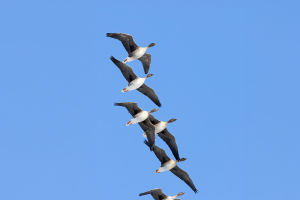
Birds use a similar trick. Migrating geese, for instance, can sleep with one hemisphere active, letting them keep one eye open to monitor their flock or watch for threats.
Flight, Migration, and Power Naps
Some animals simply don't have the luxury of long, uninterrupted sleep. Frigatebirds, which spend weeks soaring over oceans, nap in short bursts while gliding. Their total sleep time can be just a fraction of what they'd get on land, yet they still function. Migrating songbirds show a similar ability, resting briefly during long flights.
Even insects like bees and ants take micro-naps, ensuring their colonies run efficiently while never leaving the hive undefended. These strategies highlight how flexible and adaptable sleep can be when survival demands it.
The Heavy Sleepers
At the other end of the spectrum, some animals indulge in deep, extended sleep. Lions can snooze up to 20 hours a day, conserving energy between hunts. Bats top the list with as much as 22 hours of daily rest, allowing their bodies to recover from energy-intensive flight. For these predators and nocturnal creatures, longer sleep is less about vigilance and more about energy conservation.
Sloths also exemplify this pattern, spending most of their lives in the trees, where reduced movement and extended rest protect them from predators and preserve energy.
Dreams and Memory
It's not just about rest—sleep can also shape memory and behavior. Studies on lab rats show that they replay maze-running patterns in their brains while asleep, suggesting animals may consolidate learning in ways similar to humans. Birds that learn new songs often improve them after a night's rest, hinting that even short sleep cycles carry cognitive benefits. These findings suggest that sleep diversity affects not only physical survival but also learning and adaptation.
Why Variety Matters
These sleep patterns aren't just quirks—they're survival strategies. Unihemispheric sleep keeps animals safe in risky environments. Micro-napping allows long-distance travelers to endure incredible journeys. And deep sleep helps predators and high-energy animals restore their bodies. Each strategy shows how flexible biology can be when adapting to habitat and lifestyle.
Three Takeaways for Understanding Animal Sleep
1. Sleep is not uniform—different species fine-tune it for their environment.
2. Safety plays a central role, whether through vigilance during rest or sheer recovery time.
3. Human sleep is just one version among countless evolutionary solutions.
The next time you see a bird perched with one eye open or your dog twitching in a dream, remember that these behaviors link to deeper survival needs. Sleep diversity across animals is not random—it's a masterclass in adaptation.
Rest, whether partial, brief, or prolonged, is a survival strategy written into the lives of every species. It makes you wonder: what could we learn about our own rest by studying the wild variety of animal sleep?