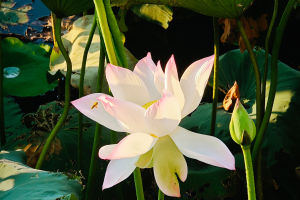
The lotus is a striking aquatic plant known for its elegant blooms and remarkable ability to grow in still, often murky water.
Despite these conditions, the flower emerges clean and vibrant, supported by long stems that rise above the surface.
These stems are not solid; they contain internal air channels that help maintain buoyancy and allow oxygen to circulate throughout the plant.
Native to large parts of Asia and Australia, lotus plants thrive in warm, slow-moving freshwater environments such as ponds, lagoons, and shallow wetlands. Their growth pattern is uniquely adapted to these ecosystems, with roots anchored firmly in dense soil while leaves and flowers extend upward toward sunlight.
1. Heat and Light: Balancing Growth Conditions
Temperature and sunlight are the primary drivers of lotus development. These plants perform best under full sunlight, where they receive at least six to eight hours of direct exposure daily. Sufficient light encourages strong stems and increases the likelihood of consistent blooming. While lotus can tolerate partial shade, especially in consistently warm climates, reduced light often leads to fewer flowers and weaker growth overall.
Warmth is equally essential. A sustained temperature of around 75°F (24°C) over a period of several months allows the plant to establish itself and progress through its growth stages effectively. Without this level of warmth, development slows significantly, and flowering may not occur at all.
That said, extremely high temperatures can also pose risks. In regions with intense, prolonged heat, leaves may become scorched or stressed. In such cases, introducing filtered light through shade cloth can protect the plant while still maintaining adequate brightness for photosynthesis.
2. Fertilizer: Meeting High Nutrient Demand
Lotus plants are vigorous growers, which means they require a reliable supply of nutrients to sustain their rapid development. Unlike many aquatic species, they can handle relatively high fertilizer levels, especially once they enter their active growth phase.
Fertilizers designed specifically for aquatic plants are the most effective choice. These are available in both slow-release and fast-release forms, and either can work well if applied correctly. One important detail is dosage—lotus generally requires more nutrients than similar aquatic plants, so slightly higher application rates are often beneficial.
Timing is critical. Fertilization should begin only after the plant produces upright leaves that rise above the water surface. This stage indicates that the root system is established and capable of absorbing nutrients efficiently. Applying fertilizer too early may result in wasted nutrients and limited benefit.
3. Potting: Creating a Stable Base
Proper planting is fundamental to lotus care. The plant’s roots spread horizontally, so a wide container matters far more than a deep one. Choose a container with a diameter of at least two feet; larger ones—up to five feet—support more vigorous growth and better flowering.
Containers must not have drainage holes, as these would allow soil to escape once submerged. A dense, clay-based soil is preferred because it stays compact underwater and provides a stable anchor for the roots. Lightweight commercial potting mixes should be avoided, as they tend to float and disrupt water clarity.
4. Water Management: Depth and Quality Control
Water plays a central role in lotus cultivation, and both depth and quality must be carefully managed. The soil should always remain submerged, with a water layer of at least two to four inches above it. As the plant matures, it can tolerate deeper water, but excessive depth may reduce warmth and slow growth.
Smaller varieties are more adaptable and can grow in water ranging from a few inches to about a foot deep. Regardless of variety, maintaining consistent water levels is crucial, as sudden changes can stress the plant and interrupt its development cycle.
5. Pest Control: Careful and Targeted Approaches
Lotus plants are occasionally affected by pests such as aphids, spider mites, and caterpillars. However, treating these problems requires caution due to the plant’s sensitivity. The leaves are covered with fine hairs that react poorly to oils, soaps, and many chemical treatments, which can cause damage the plant.
When these elements are balanced, the result is a plant that develops with strength and consistency, producing blooms that stand above the water with remarkable clarity. The process itself becomes as rewarding as the outcome, offering a sense of progression that unfolds gradually but leaves a lasting impression long after the first flower opens.