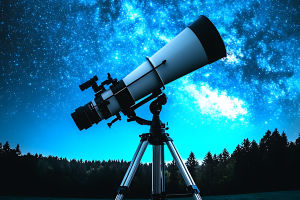
When you gaze up at the night sky, every point of light tells a story billions of years in the making.
Distant galaxies are not just faint smudges in telescope images—they are records of the universe’s history.
By studying how their shapes change over time, astronomers can understand the processes that drive cosmic evolution.
Tracing Galactic Shapes Across Time
Galaxies exist in many forms, including spirals with sweeping arms, smooth ellipticals, and irregular clusters of stars. These shapes are not fixed; they evolve over billions of years. By observing distant galaxies, astronomers effectively look back in time because their light has traveled for billions of years before reaching us.
Key insights include:
- Morphological shifts: Early spiral galaxies often appear chaotic, while nearby spirals are more structured and stable
- Stellar distribution: The way stars are spread across galaxies reveals their formation history
- Interaction evidence: Irregular shapes often indicate past collisions or mergers
Using space telescope data, researchers compare galaxies at different redshifts to track how spiral structures and overall morphology change across cosmic time.
Galactic Mergers and Interactions
Collisions between galaxies are common and play a major role in shaping their structure. A single merger can transform spiral galaxies into large elliptical galaxies, redistribute stars, and trigger bursts of star formation.
Key observations include:
- Starburst activity: Mergers can trigger rapid star formation visible through spectral changes
- Tidal features: Distorted shapes and extended streams of stars indicate recent interactions
- Growth patterns: Repeated mergers explain how galaxies grow into massive systems over time
Computer simulations of galaxy collisions are used alongside observations to better understand how real galaxies evolve.
Dark Matter and Galactic Evolution
Galaxies do not evolve in isolation. Dark matter forms an invisible structure that strongly influences their formation and growth. Observations of distant galaxies help scientists understand how dark matter halos affect galaxy shape and behavior.
Key insights include:
- Rotation curves: The motion of stars reveals the presence and distribution of dark matter
- Structural stability: Dark matter halos help maintain spiral galaxy structures
- Environmental effects: Dense dark matter regions can increase interaction and merger rates
By mapping stellar motion in distant galaxies, researchers estimate dark matter distribution and its long-term impact on galaxy evolution.
Star Formation and Galactic Transformation
Star formation plays a key role in determining a galaxy’s appearance. Young, hot stars create bright spiral patterns, while older star populations produce smoother, elliptical structures.
Key observations include:
- Ultraviolet imaging reveals regions of active star formation
- Age variations across galaxies show their evolutionary history
- Interactions between galaxies can trigger or suppress star formation
Multi-wavelength observations allow astronomers to measure star formation rates and connect them to structural changes.
Future Prospects in Galactic Studies
New generations of telescopes will continue to expand our understanding of distant galaxies. Higher resolution and deeper imaging will allow scientists to observe galaxies from the earliest periods of the universe.
Future directions include:
- Identifying subtle structural features in the earliest galaxies
- Improving models that combine simulations and real observations
- Connecting galaxy evolution to large-scale cosmic structure and dark matter distribution
Studying distant galaxies provides a powerful way to understand how the universe has evolved over time. From changing galaxy shapes to the influence of dark matter and star formation, each process reveals part of cosmic history. Observations of these faraway systems allow astronomers to trace how galaxies grow, interact, and transform across billions of years. Ultimately, distant galaxies offer a direct window into the origins and long-term evolution of the universe.