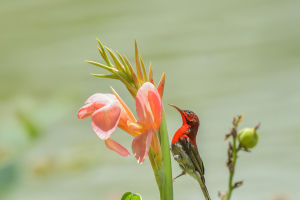
Welcome, Readers! Have you ever spotted a tiny Purple Sunbird shining with brilliant purple, blue, and green feathers among blooming flowers? Just a few months later, that same bird can appear much darker, making it seem like a completely different species.
This remarkable seasonal color change is a natural process linked to breeding rather than a permanent change in feathers. Beyond its striking appearance, the Purple Sunbird also helps pollinate flowers, supporting healthy gardens and urban ecosystems.
A Small Bird with a Big Personality
The Purple Sunbird (Cinnyris asiaticus) is one of South Asia's most familiar nectar-feeding birds. Despite its name, it is much smaller than many people expect, measuring only about 10 centimeters in length. Its quick flight and habit of hovering briefly near flowers often lead people to mistake it for a hummingbird.
However, hummingbirds are found only in the Americas, making the Purple Sunbird one of India's closest ecological equivalents. Although tiny, this energetic bird is easy to identify by its rapid movements and distinctive calls. Its sharp whistles, metallic chirps, and repeated clicking notes frequently reveal its presence long before it becomes visible among leaves and blossoms.
The Science Behind Its Color Change
One of the Purple Sunbird's most remarkable characteristics appears during spring, when the breeding season begins. Outside the breeding period, males display relatively subdued plumage with dark upperparts and yellowish underparts, allowing them to blend more effectively into surrounding vegetation. As spring arrives, hormonal changes trigger the growth of specialized breeding feathers that dramatically transform their appearance.
Instead of looking merely dark, the feathers develop an iridescent surface that reflects light in different ways. Depending on the viewing angle, the bird may appear deep purple, brilliant blue, emerald green, or even display hints of bronze. These colors are not created by pigments alone.
Much of the dazzling effect comes from microscopic structures within the feathers that refract and reflect sunlight, producing an intense metallic shine. Once the breeding season ends, the male molts into its less conspicuous plumage, conserving energy while reducing visibility to predators.
Why Only the Males Become So Colorful
The dramatic seasonal makeover serves an important biological purpose. Female Purple Sunbirds carefully evaluate potential mates, and vibrant plumage acts as an indicator of health and genetic quality. Males with brighter feathers often have better nutrition and stronger overall condition, making them more attractive during courtship.
To impress females, males perform elaborate displays by fluttering their wings, singing continuously, and chasing rivals through flowering trees. These visual and vocal performances increase their chances of finding a mate during the relatively short breeding season.
Females, by contrast, remain olive-brown above with pale yellow underparts throughout the year. Their more subdued coloration provides excellent camouflage while incubating eggs, helping protect both the nest and developing chicks from predators.
Busy Pollinators Among Blossoms
Although admired for their beauty, Purple Sunbirds are equally valuable because of their ecological role. Their diet consists primarily of nectar collected from flowering plants. As they insert their curved bills deep into blossoms, pollen sticks to their heads and feathers before being transferred to the next flower they visit.
This process allows many plants to reproduce successfully. They commonly forage among flowering trees and shrubs such as Yellow Oleander, Flame of the Forest, Hamelia, and numerous ornamental garden species.
During seasons when nectar is less abundant, they also consume berries, spiders, and small flying insects, providing additional protein that supports breeding birds and growing chicks. Unlike hummingbirds, Purple Sunbirds usually perch while feeding, although they are capable of hovering briefly when flowers cannot support their weight.
Nesting in a Changing Landscape
The Purple Sunbird has adapted remarkably well to urban environments. In natural habitats, females often suspend their nests from thorny branches, where sharp vegetation discourages predators from reaching the eggs. However, cities have introduced many new nesting opportunities.
Today these birds frequently weave hanging nests from plant fibers, grass, spider silk, and soft materials collected from gardens or human settlements. Utility wires, fences, balconies, porch roofs, and sheltered corners of buildings have all become suitable nesting sites.
Spider silk plays a particularly important role because it binds nest materials together while allowing the structure to expand slightly as chicks grow. Once eggs are laid, the female performs nearly all incubation duties, while the male actively assists by defending the nesting area and delivering food after the chicks hatch.
More Than Just a Beautiful Bird
Purple Sunbirds contribute significantly to urban biodiversity. By pollinating flowering plants, they support seed production and help maintain healthy green spaces. Their consumption of insects also provides a small but valuable form of natural pest control.
Despite living close to people, they remain wild birds whose survival depends on the availability of flowering plants, safe nesting locations, and pesticide-free habitats. Gardens filled with native flowering species provide some of the best environments for these colorful visitors.
The Purple Sunbird's stunning transformation each spring is far more than a seasonal change in appearance. Its iridescent breeding plumage reflects a sophisticated adaptation shaped by evolution, helping males attract mates while females remain safely camouflaged during nesting.