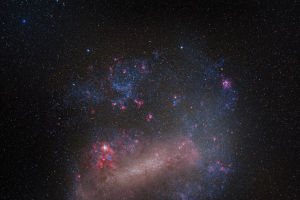
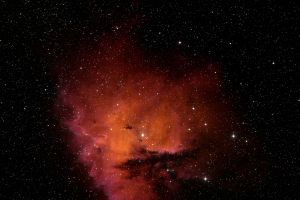
On a clear night, when city lights fade and the sky opens up, a faint glow from the cosmos stretches across the heavens.
This glow, known as cosmic background radiation, is the afterglow of the universe’s origin—a relic from the universe's infancy.
Recent studies are shedding new light on this ancient signal, offering clues about the universe's origin, composition, and eventual fate.
Understanding Cosmic Background Radiation
Cosmic background radiation, or CMB, is a faint microwave signal that fills the universe. It originated about 380,000 years after the universe’s origin, when the universe cooled enough for photons to travel freely. Studying the CMB allows scientists to glimpse conditions from the universe's earliest moments.
Example: The COBE and WMAP missions mapped tiny fluctuations in the CMB, revealing variations in density that later led to the formation of galaxies and clusters. These observations provide a snapshot of the universe's structure shortly after its birth.
Actionable step: Researchers can use CMB data to refine cosmological models, helping predict how the universe might expand or change in the coming billions of years.
Precision Mapping with Modern Telescopes
Recent advances in telescope technology, such as the Planck satellite, have produced the most precise maps of the CMB to date. These high-resolution measurements capture minute temperature variations, allowing scientists to calculate key parameters like the universe's age, density, and composition.
Example: Planck's data estimated the universe's age at 13.8 billion years and measured the proportions of dark matter, dark energy, and ordinary matter with unprecedented accuracy.
Actionable step: Combining CMB data with observations of galaxy distributions and supernovae helps researchers test theories about dark matter and dark energy, refining our understanding of cosmic evolution.
Probing Early Universe Mysteries
Studying the CMB isn't just about mapping—it also reveals fundamental physics. Tiny irregularities in the radiation could point to phenomena like cosmic inflation, a rapid expansion of space in the universe's first fractions of a second. Detecting specific polarization patterns in the CMB can confirm or challenge these theories.
Example: Experiments like BICEP2 aimed to detect B-mode polarization, a subtle twist in the CMB signal that would support inflation models. While initial results were debated, ongoing studies continue to refine the search.
Actionable step: Researchers can develop more sensitive instruments to detect polarization patterns, pushing the boundaries of observational cosmology and deepening our knowledge of the universe's birth.
Testing the Standard Cosmological Model
CMB studies serve as a critical test of the Lambda-CDM model, the prevailing cosmological framework. By comparing theoretical predictions with observed CMB patterns, scientists can verify assumptions about the universe's composition and its expansion history.
Example: Discrepancies between CMB-derived Hubble constant values and measurements from supernovae highlight possible gaps in current models, prompting new research into potential unknown physics.
Actionable step: Cross-referencing CMB results with independent astronomical observations allows for robust testing of cosmological theories and may hint at new physics beyond the standard model.
Implications for the Future of the Universe
CMB research not only explains the past but also informs predictions about the universe's fate. Understanding the balance between matter, dark energy, and cosmic expansion helps scientists model whether the universe will keep expanding, slow down, or experience dramatic changes in the distant future.
Example: Detailed analysis of CMB fluctuations supports the idea that dark energy dominates the universe, driving accelerated expansion and influencing long-term cosmic evolution.
Actionable step: Continuous observation of the CMB, combined with studies of galaxy evolution and large-scale structures, allows cosmologists to refine predictions about the universe's trajectory over billions of years.
The cosmic microwave background is more than just a faint glow—it's a time capsule from the universe's earliest moments. Each new observation, map, and measurement deepens our understanding of how the cosmos began, evolved, and continues to expand. By studying this ancient light, we not only uncover secrets of the past but also glimpse the future of the universe itself.