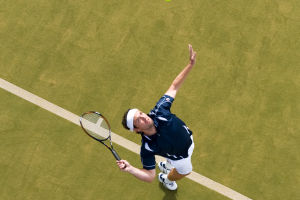
Lykkers, a strong lacrosse attack is not simply about sprinting faster or swinging the stick harder.
The player in motion here shows what makes the sport exciting: speed, control, protective equipment, a secure cradle, and the ability to change direction while keeping possession.
Attack Without Losing Control
When you carry the ball at speed, several jobs happen at once. You are running, protecting possession, scanning the field, judging defenders, and preparing your next move.
Carry the Stick Where You Can Use It
A common mistake is letting the stick drift too far away from the body while running. That may feel fast, but it gives defenders a clearer opportunity to challenge possession.
Keep the head of the stick relatively close while you move, with your hands positioned so you can cradle, pass, or change direction quickly. Your upper hand controls the stick while the lower hand provides support and leverage.
Practice carrying the ball while jogging first. Every ten steps, change the stick from one side of your body to the other without slowing down.
Once that feels easy, increase your speed.
The real goal is not simply keeping the ball in the pocket. You want to reach the point where stick movement feels almost automatic, leaving more attention available for reading the field.
Make Your Cradle Smaller at Speed
Huge cradling movements look energetic but are rarely efficient when you accelerate.
As your running speed increases, make the cradle tighter and more controlled. Your wrists and forearms should guide the motion instead of your whole upper body swinging dramatically.
Try a simple drill over 20 meters. Run the first five meters slowly with a comfortable cradle, accelerate through the middle ten, then ease down during the final five. Notice how the cradle naturally becomes more compact as your pace rises.
Repeat this while keeping your head up.
If the ball repeatedly moves too close to the edge of the pocket, reduce the size of the motion rather than increasing it.
Run With Your Eyes Up
Possession means very little if you never notice the open teammate ten meters away.
When practicing alone, place four visible markers around a field. As you run and cradle, randomly look toward a marker and identify something near it without staring down at the stick.
With a partner, make the drill more realistic. Have your partner raise different numbers of fingers while you move. Call out the number while continuing to carry the ball.
This trains field awareness without requiring complicated equipment.
During a game, that habit lets you notice approaching defenders earlier. More importantly, it gives you extra time to choose whether to pass, continue running, or change direction.
Change Direction Before You Need To
Fast attackers become much harder to defend when their direction is unpredictable.
Instead of waiting until a defender is directly in front of you, make your move slightly earlier. A quick plant and change of angle may create enough separation to continue forward without heavy contact.
Set three markers roughly four meters apart in a zigzag pattern. Run toward each marker, lower your center of gravity slightly, plant your outside foot, and accelerate toward the next one.
Carry the stick throughout the drill.
Train Like a Game
Stick skills become far more useful when they survive real movement. A player may look excellent while standing still, then lose control once sprinting begins. You can avoid that gap by combining basic skills with acceleration, turning, passing, and recovery.
Practice Sprinting Into Possession
Many game situations begin with movement rather than a comfortable stationary start.
Place a ball on the field about eight meters away. Sprint toward it, collect it cleanly, continue running another ten meters, then make a controlled pass to a partner or target.
The challenge is keeping your speed through the pickup rather than stopping completely.
Start slowly enough to collect the ball cleanly. Once you succeed consistently, increase the approach speed.
This drill trains an important habit: your next action should already be forming while you gain possession.
Use Both Sides Before You Need Them
Most players naturally prefer one side. That is normal. The problem appears when a defender realizes you only trust that side.
Spend part of every practice carrying, catching, and passing on your less comfortable side.
A simple 10 minute routine works well. Spend two minutes cradling, three minutes passing against a rebound surface or with a partner, two minutes catching while moving, and three minutes combining both sides during short runs.
Do not chase perfect technique immediately. Aim for clean repetition.
Over time, having two usable sides gives you more attacking angles and prevents defenders from predicting your movement so easily.
Accelerate After Every Move
A direction change only matters if you create separation afterward.
Players sometimes execute a good dodge and then continue at the same pace. That gives the defender time to recover.
During practice, treat every successful change of direction as the starting signal for a short burst. Make your move, then accelerate hard for three to five steps.
Those few steps are often where space appears.
Try five repetitions from each side, rest briefly, then repeat. Focus on the quality of the acceleration rather than doing endless tired repetitions.
Lykkers, effective lacrosse attack comes from combining speed with control. Keep the stick close, shorten your cradle when accelerating, scan the field, train both sides, and burst forward after each change of direction. When your feet, eyes, and stick begin working as one system, running with possession stops feeling chaotic and starts becoming one of the most enjoyable parts of the game.