Hi, Lykkers! Penang is widely appreciated for its distinctive cultural heritage, traditional craftsmanship, and vibrant artistic traditions.
Among its most recognizable fashion creations is the Nyonya kebaya, an elegant outfit known for its delicate embroidery, colorful fabrics, and beautifully tailored silhouette.
Traditionally associated with Peranakan women, this garment represents a remarkable combination of textile artistry and personal style.
The Nyonya kebaya is more than a traditional blouse. It reflects generations of sewing skills, creative expression, and attention to detail. From its intricate floral patterns to its carefully selected accessories, every element contributes to an outfit that continues to inspire traditional and contemporary fashion in Penang.
Understanding the Traditional Nyonya Kebaya
The Nyonya kebaya is a fitted, usually long-sleeved blouse traditionally worn with a batik sarong. Unlike loose-fitting traditional garments, its design follows the natural shape of the upper body, creating a graceful and feminine silhouette.
One of its distinctive characteristics is the open front, which is traditionally secured using decorative brooches known as kerongsang. These brooches are commonly arranged in a set of three, adding an ornamental detail to the garment.
The blouse is often made from lightweight, slightly transparent fabrics such as cotton voile. Its front panels and edges provide space for elaborate embroidery, while the fitted construction gives the outfit its recognizable appearance.
Traditional Nyonya kebayas are available in various colors, including turquoise, pink, green, yellow, red, and soft pastel shades. Bright colors and detailed patterns are particularly appreciated in Penang's traditional fashion scene.
The Art of Nyonya Embroidery
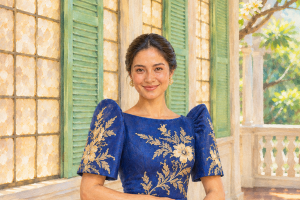
Embroidery is one of the most important features of the Nyonya kebaya. The decorative stitching transforms a simple blouse into a detailed textile artwork that showcases the patience and creativity of skilled artisans.
Common embroidery motifs include flowers, leaves, butterflies, birds, and other natural elements. Some designs feature small decorative patterns arranged along the front edges and sleeves, while more elaborate versions incorporate larger compositions across the garment.
Traditional Nyonya embroidery requires careful planning and precise stitching. Artisans must consider the fabric's delicate structure to ensure that the decorative patterns remain balanced and do not damage the material.
Different embroidery techniques are used to create textured surfaces, fine outlines, and decorative openwork. In Penang, the craft has been maintained by experienced embroiderers who continue to produce traditional designs and train younger generations.
The quality of the embroidery is often an important factor when selecting a Nyonya kebaya, as finely executed details can significantly influence the garment's overall appearance.
Batik Sarong: The Perfect Complement
The traditional Nyonya kebaya is usually paired with a batik sarong, a wraparound skirt that completes the ensemble. The combination creates an attractive balance between the blouse's detailed embroidery and the skirt's colorful textile patterns.
Batik is produced using a wax-resist dyeing technique. Artisans apply wax to selected areas of fabric before dyeing it, allowing different colors and patterns to develop through carefully controlled stages.
Traditional batik sarongs often feature floral arrangements, geometric compositions, and decorative motifs inspired by nature. Some designs use contrasting colors, while others feature softer combinations that complement the blouse.
The sarong is wrapped and folded around the waist to create a comfortable fit. Depending on personal preference, the fabric can be arranged to highlight particular patterns or create a more streamlined silhouette.
Choosing a matching sarong requires attention to color, pattern, and proportion. A heavily embroidered blouse may look particularly attractive with a simpler batik design, while a plain kebaya can be paired with a more colorful skirt.
Traditional Accessories and Beaded Footwear
Accessories play an important role in completing the Nyonya kebaya ensemble. One of the most recognizable additions is the kerongsang, a decorative brooch traditionally used to secure the blouse.
Another distinctive accessory is kasut manek, a pair of traditional beaded slippers. These shoes are decorated with tiny glass beads carefully stitched onto a fabric surface to create colorful patterns.
The designs frequently feature flowers, birds, butterflies, and geometric motifs. Producing a pair requires considerable patience because individual beads must be arranged and secured precisely.
Traditional hair accessories, such as decorative pins and ornamental combs, can also complement the outfit. Together, these details create a coordinated appearance that highlights the craftsmanship associated with Nyonya fashion.
Penang's Nyonya Kebaya Craftsmanship
Penang remains an important place for appreciating and preserving Nyonya embroidery and traditional clothing. In George Town, visitors can discover fashion boutiques, craft collections, and cultural spaces that introduce the beauty of Peranakan textiles.
Local artisans and fashion businesses continue to offer embroidered kebayas, batik sarongs, and custom-made garments. Some specialize in traditional patterns, while others introduce updated colors and contemporary tailoring.
The work of experienced embroiderers is particularly valuable. Their knowledge of stitching techniques, fabric selection, and decorative arrangements helps maintain the quality and distinctive appearance of traditional garments.
Workshops and craft demonstrations also provide opportunities for younger generations to learn about traditional embroidery and develop an appreciation for handmade clothing.
Modern Nyonya Kebaya in Contemporary Fashion
Although the traditional Nyonya kebaya retains its classic appeal, modern designers continue to explore new interpretations. Contemporary versions may feature shorter sleeves, simplified embroidery, different neckline shapes, and updated fabric choices.
Some designers combine traditional embroidered blouses with modern skirts or trousers, creating outfits that can be worn for different occasions. Others maintain the classic sarong combination while experimenting with contemporary color palettes and accessories.
These developments demonstrate how traditional clothing can adapt to changing fashion preferences without losing its recognizable identity.
Preserving the Elegance of Penang's Nyonya Kebaya
The Nyonya kebaya remains a beautiful representation of Penang's textile artistry and fashion craftsmanship. Its delicate embroidery, carefully tailored silhouette, colorful batik sarong, and distinctive accessories demonstrate the remarkable attention to detail behind traditional clothing.
Supporting local artisans, appreciating handmade embroidery, and introducing traditional fashion to younger audiences are important ways to preserve these skills.
As contemporary designers continue to reinterpret the garment, the Nyonya kebaya maintains its place as an enduring symbol of elegance, creativity, and the artistic heritage of Penang.